Most deck problems do not announce themselves.
There is rarely a moment where something snaps, collapses, or gives way all at once. Instead, the damage builds quietly season after season, freeze after thaw until one day a board gives slightly underfoot, a railing shifts when someone leans on it, or you notice the wood has turned a colour it was never supposed to be.
By the time most Windsor homeowners realize something is wrong, the damage has usually been developing for two or three years.
That is why this article exists. Not to alarm you, but to give you a clear list of what to look for before a small repair becomes a structural failure or worse, before someone gets hurt on a deck that looked fine from a distance.
Walk through this list the next time you are outside. Some of what you find will be manageable. Some of it will need professional attention. Knowing the difference is what matters.
1. Soft Spots When You Walk Across the Boards
This is usually the first sign people notice, and they almost always underestimate it.
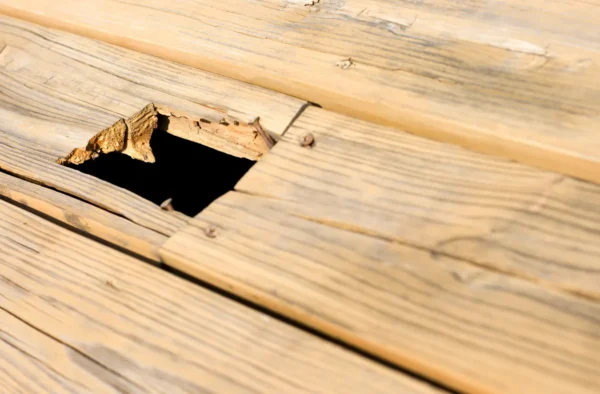
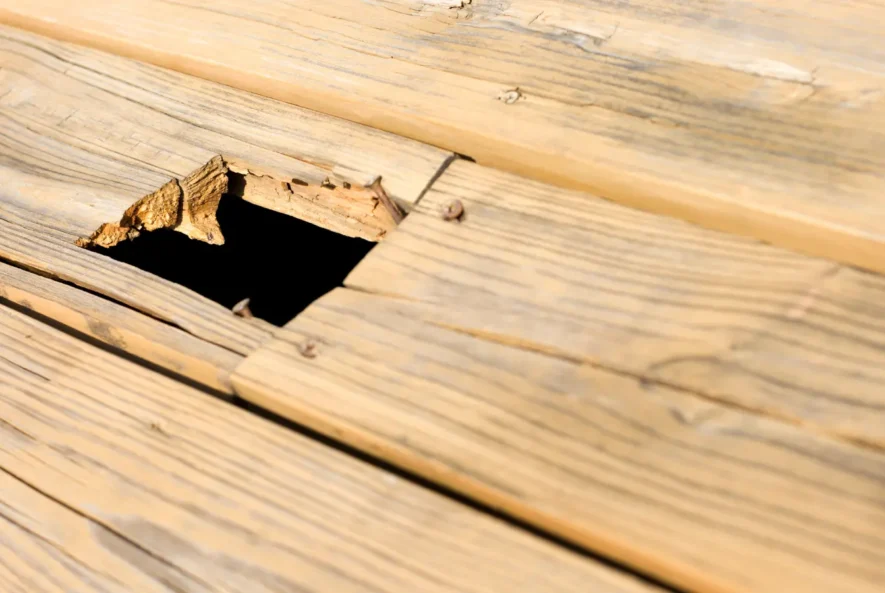
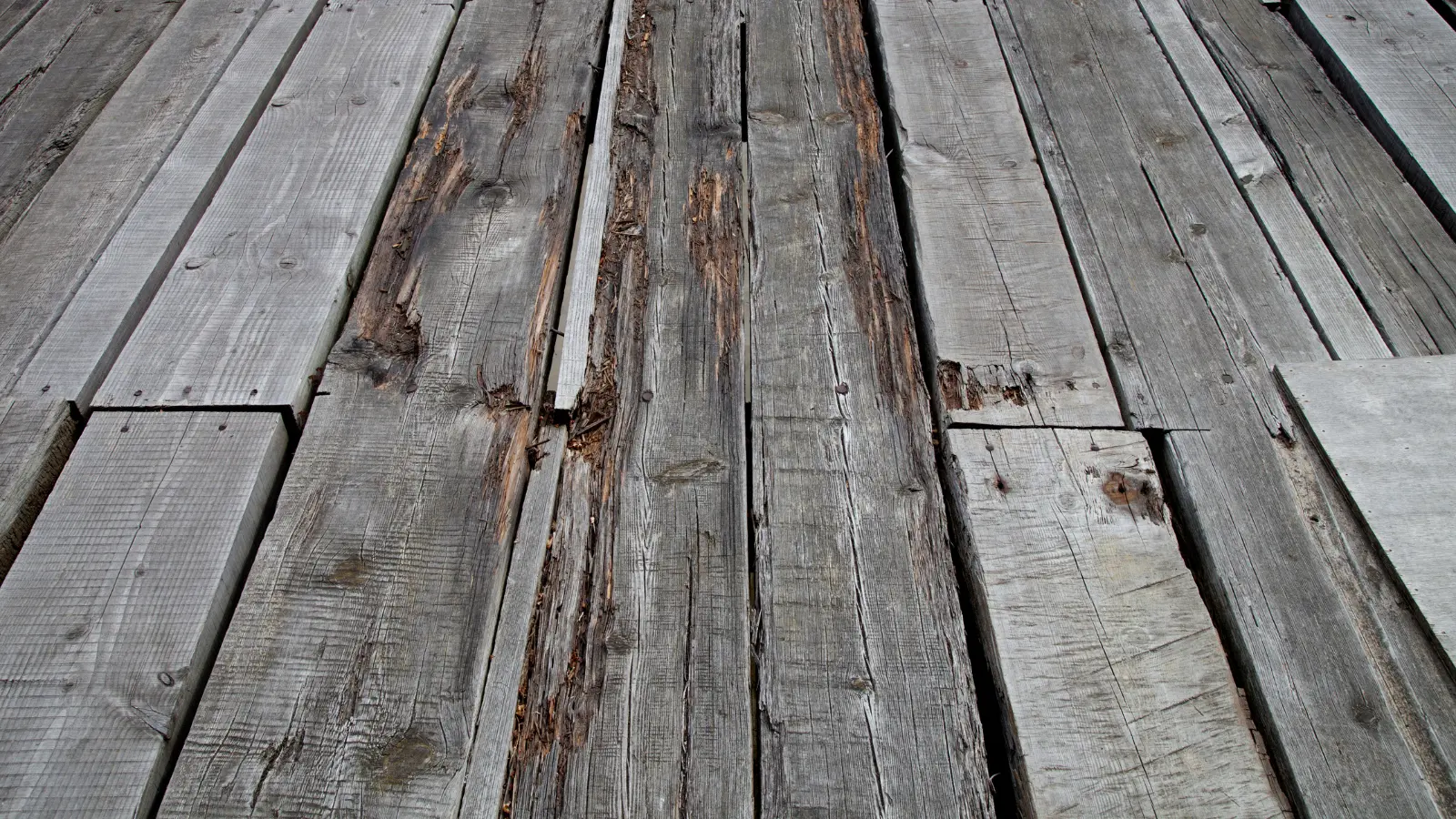
When you step on a board and it gives slightly not bounces, not creaks, but actually yields under your weight that is rot. Healthy pressure-treated or cedar wood does not compress underfoot. Softness means moisture has been trapped inside the wood long enough to break down its cellular structure.
The problem with soft spots is that the damage is rarely contained to the surface. Wood rot spreads along the grain, which means a soft board on top is almost always an indicator of a compromised joist beneath it. If you press down on a soft board and then stick a screwdriver into the end of the nearest joist, you will often find the same spongy texture there.
2. Railings That Move When You Push Them
Stand at the edge of your deck and push the railing firmly sideways. It should not move at all. Not slightly, not noticeably, not even a little.
If it does, you have a problem that needs attention before anyone leans on it for balance especially children, elderly family members, or anyone stepping down from the deck in the dark.
Wobbly railings happen for a few different reasons. The most common is corroded fasteners at the post base. Over time, the screws or bolts holding the post to the deck framing rust out, which removes the holding power without any visible indication on the surface. The post looks fine. The fasteners are not.
The second common cause is rot at the base of the post itself specifically where the post contacts the decking surface or sits close to the joist below. Water pools at post bases, and without proper flashing or a gap to allow drainage, the wood deteriorates from the contact point inward.
3. Boards That Are Cracked, Split, or Visibly Warped
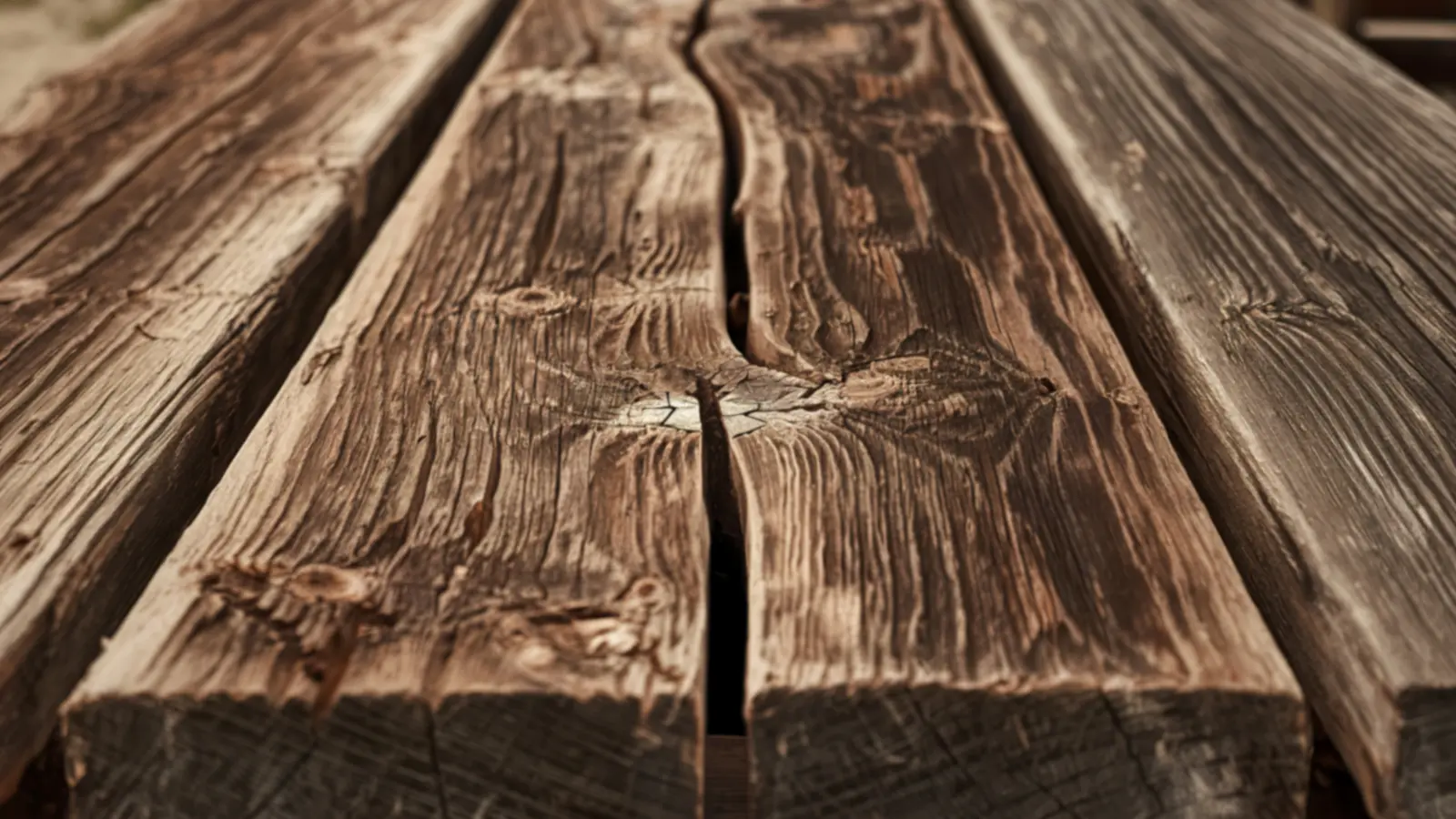
Deck boards expand and contract with every temperature change. In Windsor, those changes are significant from deep winter cold to humid summer heat, wood moves constantly. Over enough cycles, that movement creates cracks, splits along the grain, and in some cases full warping where the board has twisted away from the surface it was installed on.
Small surface cracks are normal in aging wood and do not automatically require board replacement. The check is whether the crack runs across the width of the board or runs deep along the length. Surface crazing is cosmetic. A crack that goes deep, that you can feel with a fingernail or slip a tool into, is structural water gets into that crack every time it rains, and the freeze-thaw cycle works it wider every winter.
Warped or cupped boards are a tripping hazard even before they become a structural concern. A board that has lifted at the edge or twisted at one end catches feet, especially in low light. These need to be repaired deck boards or replaced before someone catches a toe.
4. Nails or Screws That Have Backed Out of the Surface
Look across the deck from a low angle. Any raised nail heads or screw heads that stand above the surface are a sign that the fasteners have backed out either because the wood has dried and contracted around them, or because the joist below has deteriorated and no longer holds them.
Raised fasteners are a safety issue on two fronts. First, they are a snagging point for bare feet, shoes, and children’s hands. A partially raised screw head on a deck board can cause a serious injury that the homeowner never anticipated.
Second and this is the structural reading of the same sign a fastener that has backed out of the decking tells you something about the material it was driven into. If the screw was properly installed and the joist beneath it is sound, the screw does not back out on its own. When fasteners consistently back out of a deck surface, it often means the joists are shrinking due to drying, or they have softened due to moisture. The fasteners are telling you something about what you cannot see.
5. Visible Sagging Between Supports
Step back from the deck and look at it from the side. The surface should be flat and level across its span. If you can see a dip or sag between support points especially in the middle of a long span the joists have lost structural integrity.
Joists are the hidden horizontal members that run perpendicular to the deck boards and carry the weight of everything on the deck surface to the beams and posts below. When a joist weakens, the deck surface above it sags. The deck may still feel reasonably firm to walk on, because the boards themselves distribute weight across adjacent joists. But that sag is the structure showing you it is failing from within.
Causes of joist failure include moisture damage from standing water, inadequate ventilation below the deck that allows humidity to build up, insect damage (more on that below), and simply age older joists that were not sealed or protected eventually deteriorate from repeated wet-dry cycles.
6. Rot at Post Bases or Beam Connections
The posts that hold your deck off the ground are the most critical structural element in the entire system. They carry everything above them the deck frame, the decking, the railings, the furniture, and the people using the space. If a post base fails, there is nothing else in the structure that compensates for it.
Post base rot is common in Ontario because posts are vulnerable at exactly the point where they meet concrete or touch the ground. Moisture migrates upward through concrete by capillary action and is absorbed into the end grain of the wood which is the most absorbent part. Without proper standoffs and drainage, this contact point deteriorates over time.
7. Mold, Mildew, or Moss Covering the Surface
Some level of mould and mildew on an older deck is normal in Windsor’s climate, and surface cleaning handles it. What you are watching for is the kind of persistent, recurring growth that comes back within weeks of cleaning particularly growth that appears in the same areas each season.
That pattern usually indicates a drainage or ventilation problem. Water is pooling somewhere it should not be, or the deck does not have enough airflow underneath to dry out properly between rain events. In those conditions, the surface stays damp for longer than the wood can tolerate, and the biology follows the moisture.
8. Deck Steps That Feel Unstable or Have Visibly Damaged Treads
Deck stairs take more repeated loading than any other part of the structure. Every time someone climbs or descends, the full weight of a person hits the stair treads and risers in a dynamic, impact-loaded way that is harder on wood than simply standing still.
Stairs also hold water. The horizontal surface of each tread collects rain, and unless the deck step repair includes proper drainage slope and sealed edges, the water sits and penetrates the wood from the top surface downward.
9. Insect Damage Holes, Hollow Sounds, or Fine Sawdust
Carpenter ants and termites both attack wood decks, and both cause damage that is structurally significant long before it becomes visible on the surface.
Carpenter ants do not eat wood the way termites do they excavate it. They remove material to create galleries for nesting, hollowing out the interior of a joist or post while leaving a thin exterior shell that looks intact until pressure is applied. Tapping on infested wood produces a hollow sound that is distinct from solid material. Fine, sawdust-like frass near the base of posts or along the joist line is a sign of active activity.
10. The Finish Has Failed and Bare Wood Is Exposed
A stain or sealant on a wood deck is not cosmetic in any meaningful sense. It is the primary barrier between the wood and everything that damages it UV radiation, moisture, freeze-thaw cycling, mold spores. When that finish fails and bare wood is exposed, the clock starts.
Unprotected deck boards in Windsor’s climate can show meaningful deterioration within two to three years. Grey weathering is early stage and largely cosmetic. Checking and cracking in the surface is the next stage and begins to allow moisture in. Softening and rot follow if the wood is not refinished before it reaches that point.
When to Call Windsor Handy Wizards
Not every item on this list requires a specialist contractor. Some of it is maintenance you can handle yourself refinishing, cleaning, tightening surface fasteners, replacing an isolated cracked board over a sound joist.
But structural issues sagging sections, post base failures, stair stringer problems, widespread rot, railing systems that need rebuilding to code these need professional attention. Getting them wrong is either a safety risk or a financial one, and usually both.
Windsor Handy Wizards handles deck repair across Windsor, Ontario. We fix isolated board damage, repair deck stairs, replace post hardware, rebuild railing systems, and assess overall deck condition for homeowners who are not sure what they are looking at. We are not here to push unnecessary work we will tell you what actually needs doing and give you a fair price for it.
Frequently Asked Questions
How do I know when to replace deck boards instead of repairing them?
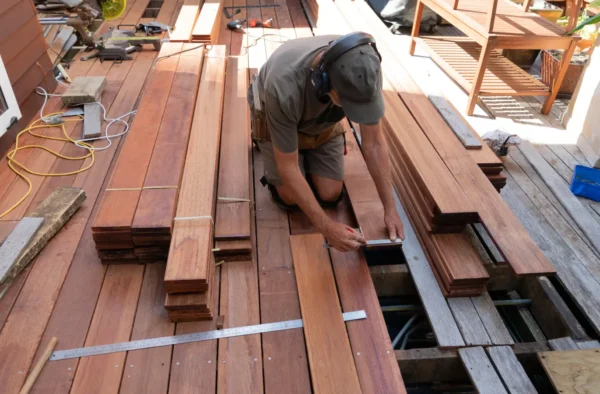
The decision comes down to what is beneath the board as much as the board itself. A cracked or split board over a solid, sound joist can be replaced without further work. A board that is soft or showing rot almost always indicates moisture has reached the joist below, which means the joist needs inspection before new boards go down.
When should you replace a deck instead of repairing it?
When to replace a deck becomes the right question when multiple structural components are compromised at the same time post bases, joists, beams, and ledger board all showing deterioration simultaneously. At that point, addressing each issue individually typically costs as much as a rebuild, and the result is a repaired deck with aging components that will need the same work again in a few years.
Can a handyman repair damaged deck boards safely?
Yes a qualified deck repair handyman handles the most common deck board repairs daily, including replacing cracked or rotten surface boards, securing loose fasteners, repairing stair treads, and tightening railing hardware. The important distinction is between surface repairs and structural repairs. Board replacement, stair tread repair, and hardware fixes fall within handyman work. Joist replacement, post base reconstruction, and ledger board repairs are structural jobs that require knowledge of load-bearing requirements.
How much does wood deck repair typically cost?
Wood deck repair costs in Windsor, Ontario vary widely based on what needs to be done. Replacing a few surface boards and refinishing typically runs $300 to $700. Moderate repairs involving multiple boards, railing work, and hardware replacement range from $700 to $2,000. Structural repairs joist replacement, post base reconstruction, stair rebuilds fall in the $2,000 to $5,000 range depending on scope. Full deck replacement starts at $8,000 and increases with size and materials.
Can rotten deck boards be repaired, or do they need replacement?
Rotten deck boards cannot be meaningfully repaired they need to be replaced. Wood rot is a biological process that has broken down the cellular structure of the wood, and once that happens, the board has lost its load-bearing capacity and will not recover with treatments or sealants. The more important question when you find a rotten board is what the joist underneath looks like. If the joist is solid, replacing the surface board is a simple repair.
Should I hire deck repair contractors or repair my deck myself?
Surface maintenance cleaning, staining, replacing a single isolated board, tightening fasteners is reasonable DIY work for most homeowners. The line shifts when the repair involves anything structural or code-related. Railing systems need to meet Ontario building code requirements for height and load capacity. Stair stringers and structural posts require proper fastening and connection to the frame. Joist and beam repairs involve temporarily supporting the deck and understanding load distribution.
What are the most common deck repair issues homeowners face?
In Windsor's climate, the most frequent issues are rot in deck boards and joists from freeze-thaw moisture cycling, loose railings due to corroded fasteners at post bases, raised nails and backing screws from wood movement across seasons, cracked and split surface boards from repeated expansion and contraction, failed deck finish allowing bare wood to absorb moisture, and deteriorating post bases where wood contacts concrete or sits close to grade.
How can I find reliable deck repairs in my area?
For deck repairs in my area in Windsor, Ontario, look for a service that inspects the full structure rather than just quoting the visible damage. A reliable deck repair provider will look at your joists, post bases, ledger board connection, and railing system not only the boards you have already noticed. Check that they are insured, ask whether they are familiar with Ontario building code requirements for railings and stairs, and ask for a written scope of work before anything starts.